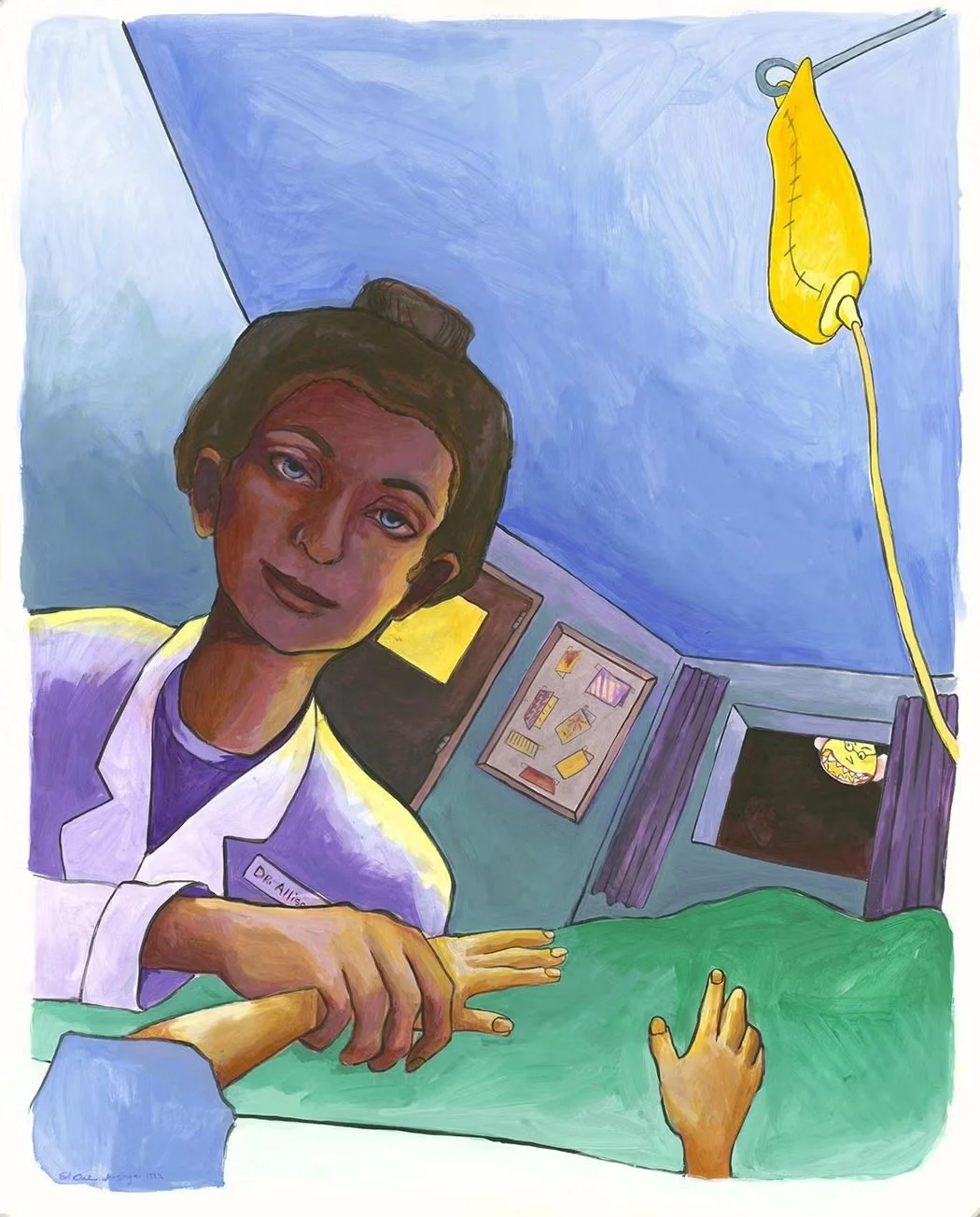
Preserving the Art of Ed Aulerich-Sugai: An artist’s work is traced through memory, stewardship, and decades of care
By Emilie Hardman. JSTOR Daily, May 6, 2026
An in-depth article about Ed Aulerich-Sugai’s life and artwork has been published by JSTOR Daily to coincide with the digitization and publication of the Ed Aulerich-Sugai Collection and Archive by JSTOR and Reveal Digital. Grounded in interviews with Daniel Ostrow about his decades-long efforts to preserve Aulerich-Sugai’s artwork and archives, the article explores themes of care, stewardship, queer history, and art as healing.
‘Eighteen months after Ed died, Daniel enrolled in a modern art survey course. He told me he needed grounding. He didn’t want his education in art that began with Ed to end with Ed’s death. He kept a journal then and he shared an entry with me from September 2, 1995, written while he waited for the lecture to start: “Overwhelmed by the task of carrying his art into the world, I’ve enrolled in a lecture series at SFMOMA… Sometimes I wish a curator would enter my life and ease the task, but perhaps it is better for me to stumble along, let go of the pressure, allow Ed’s artwork to lead me.” And so it did, shaping a new kind of relationship to Ed through art, legacy and stewardship. Daniel has not just been preserving Ed’s work, he has been holding open the possibility of a future for it…
‘Near the end of his life, Ed asked Daniel to “bring my art out into the world.” That request initiated a lifetime of work. After all these years shaped by domestic care, the full archive enters public circulation, where it can be taken up by any interested viewer. The continuity of Daniel’s care and admiration is not broken by this movement; it is extended. In its older sense, inheritance names not the transfer of possessions but the condition of being recognized and admitted into an existing set of relations and responsibilities. Now, we all inherit an archive and the devotion that held it together.’
– From “Preserving the Art of Ed Aulerich-Sugai” by Emilie Hardman